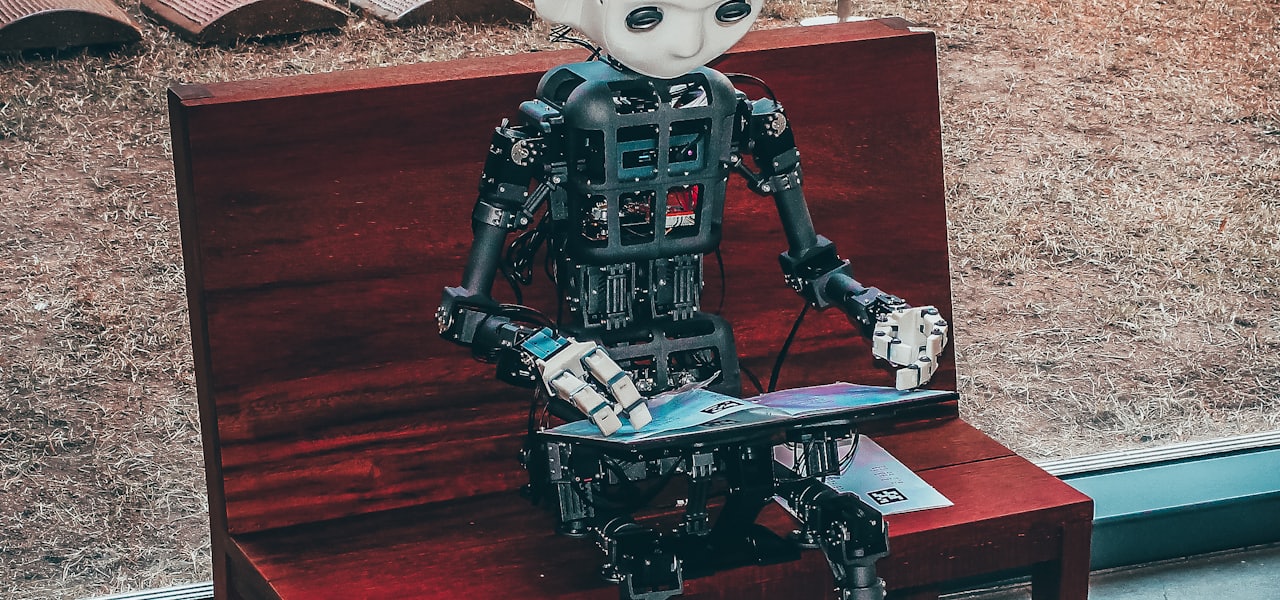
In information technology, a bare machine (or bare-metal computer) is a computer which has no operating system. The software executed by a bare machine, commonly called a bare metal program or bare metal application, is designed to interact directly with hardware. Bare machines are widely used in embedded systems, particularly in cases where resources are limited or high performance is required. == Bare machine computing == Bare Machine Computing is a computing paradigm in which application software runs directly on a bare machine as a single, stand-alone executable, without an operating system or device drivers. The application software has direct access to hardware resources, and there is typically no distinction between user and kernel mode. It is self-managed software that boots, loads and runs without using any other software components. Bare metal programs are typically written in a close-to-hardware language such as C or assembly language. == Advantages == Typically, a bare-metal application will run faster, use less memory and be more power efficient than an equivalent program that relies on an operating system, due to the inherent overhead imposed by system calls. For example, hardware inputs and outputs are directly accessible to bare metal software, whereas they must usually be accessed through system calls when using an OS. It has no OS and therefore has no OS-related vulnerabilities. == Disadvantages == Bare metal applications typically require more effort to develop because operating system services such as memory management and task scheduling are not available. Debugging a bare-metal program may be complicated by factors such as: Lack of a standard output. The target machine may differ from the hardware used for program development (e.g., emulator, simulator). This forces setting up a way to load the bare-metal program onto the target (flashing), start the program execution and access the target resources. == Examples == === Early computers === Early computers, such as the PDP-11, allowed programmers to load a program, supplied in machine code, to RAM. The resulting operation of the program could be monitored by lights, and output derived from magnetic tape, print devices, or storage. Amdahl UTS's performance improves by 25% when run on bare metal without VM, the company said in 1986. === Embedded systems === Bare machine programming is a common practice in embedded systems, in which microcontrollers or microprocessors boot directly into monolithic, single-purpose software without loading an operating system. Such embedded software can vary in structure. For example, one such program paradigm, known as foreground-background or superloop architecture, consists of an infinite main loop in which each task is executed sequentially and must voluntarily return control back to the loop. The loop runs these cooperative background processes that are not time-critical, while interrupt service routines momentarily interrupt the loop to handle time-critical foreground tasks.
Cloud-native computing
Cloud native computing is an approach in software development that utilizes cloud computing to "build and run scalable applications in modern, dynamic environments such as public, private, and hybrid clouds". These technologies, such as containers, microservices, serverless functions, cloud native processors and immutable infrastructure, deployed via declarative code are common elements of this architectural style. Cloud native technologies focus on minimizing users' operational burden. Cloud native techniques "enable loosely coupled systems that are resilient, manageable, and observable. Combined with robust automation, they allow engineers to make high-impact changes frequently and predictably with minimal toil." This independence contributes to the overall resilience of the system, as issues in one area do not necessarily cripple the entire application. Additionally, such systems are easier to manage, and monitor, given their modular nature, which simplifies tracking performance and identifying issues. Frequently, cloud-native applications are built as a set of microservices that run in Open Container Initiative compliant containers, such as Containerd, and may be orchestrated in Kubernetes and managed and deployed using DevOps and Git CI workflows (although there is a large amount of competing open source that supports cloud-native development). The advantage of using containers is the ability to package all software needed to execute into one executable package. The container runs in a virtualized environment, which isolates the contained application from its environment.
Parents & Kids Safe AI Coalition
The Parents & Kids Safe AI Coalition is a political action committee that advocates for regulation of artificial intelligence on child safety. As of April 2026, the group is funded solely by the artificial intelligence company OpenAI, which pledged $10 million to the effort. == History == In October 2025, California Gov. Gavin Newsom vetoed Assembly Bill 1064. Sponsored by Common Sense Media, the bill would have introduced stronger child safety protections for AI chatbots. The following month, Common Sense Media founder Jim Steyer filed a ballot initiative intended to restore the "guardrails" lost in the veto. In response, OpenAI introduced a competing initiative. In January 2026, Common Sense Media and OpenAI announced that they would be working together on a compromise ballot initiative, the Parents & Kids Safe AI Act. Reporting indicated that initial outreach emails to child safety organizations failed to disclose OpenAI's involvement. Several advocacy groups signed an open letter claiming the initiative would shield AI companies from liability and undermine age verification, among other concerns. After Common Sense Media met with opposing groups in February, the ballot initiative was put on hold and the organizations involved sought to negotiate with the Legislature instead. The Parents & Kids Safe AI Coalition was founded to support this effort. In March 2026, the group reached out to some of the same groups contacted earlier, asking them to endorse its list of policy priorities. Again, some organizations reported being unaware of OpenAI's level of involvement. At least two groups withdrew from the coalition after learning about the financial ties. The priorities themselves were described as "vague but fairly uncontroversial" by The San Francisco Standard.
Oracle Database
Oracle AI Database (commonly referred to as Oracle Database, Oracle DBMS, Oracle Autonomous Database, or simply as Oracle) is a proprietary multi-model database management system produced and marketed by Oracle Corporation. It is a database commonly used for running online transaction processing (OLTP), data warehousing (DW) and mixed (OLTP & DW) database workloads. Oracle AI Database uses SQL for database updating and retrieval. Oracle Database runs on-premises, on Oracle engineered systems such as Oracle Exadata, on Oracle Cloud Infrastructure, and as a managed Autonomous Database service. It is also offered inside Microsoft Azure, Google Cloud, and Amazon Web Services data centers through Oracle's multicloud offerings. The current long-term support release, Oracle AI Database 26ai, became available in the cloud and on Oracle engineered systems in October 2025 and on-premises for Linux x86-64 in January 2026. == History == Larry Ellison and his two friends and former co-workers, Bob Miner and Ed Oates, started a consultancy called Software Development Laboratories (SDL) in 1977, later Oracle Corporation. SDL developed the original version of the Oracle software. The name Oracle comes from the code-name of a Central Intelligence Agency-funded project Ellison had worked on while formerly employed by Ampex; the CIA was Oracle's first customer, and allowed the company to use the code name for the new product. Ellison wanted his database to be compatible with IBM System R, but that company's Don Chamberlin declined to release its error codes. By 1985 Oracle advertised, however, that "Programs written for SQL/DS or DB2 will run unmodified" on the many non-IBM mainframes, minicomputers, and microcomputers its database supported "Because all versions of ORACLE are identical". Later releases introduced capabilities associated with successive eras of the product, including PL/SQL stored procedures and triggers in Oracle7 (1992), Real Application Clusters in Oracle9i (2001), grid infrastructure and automatic management in Oracle 10g (2003), the multitenant architecture and In-Memory Column Store in Oracle Database 12c (2013), and AI Vector Search and JSON Relational Duality in Oracle Database 23ai (2024). In October 2025 Oracle rebranded the 23ai line as Oracle AI Database 26ai. (see Release History) == Architecture == An Oracle Database system consists of an instance and a database. The instance is a set of memory structures and background processes; the database is the set of files that store data. The instance exists only in memory, and a single instance is associated with one multitenant container database. The principal memory structures are the System Global Area, which is shared, and the Program Global Areas, which are private to individual processes. The shared pool, database buffer cache, and redo log buffer are components of the System Global Area, and the optional In-Memory Column Store also resides there. Background processes operate on the database files and use these memory structures; they include the database writer, the log writer, the checkpoint process, and the system and process monitor processes. Server processes handle connections from client programs and run their SQL statements. Storage is organized logically and physically. Logically, data is held in tablespaces composed of segments, extents, and data blocks. Physically, the database comprises datafiles, control files, and online redo log files, with archived redo logs supporting media recovery. == High Availability and Scalability == Oracle Database includes several technologies for high availability, disaster recovery, and scale. Oracle Real Application Clusters allows multiple instances on separate servers to access one shared database concurrently; it was introduced with Oracle9i in 2001. Oracle Data Guard maintains standby databases synchronized with a primary database, and Active Data Guard additionally allows read-only workloads on a standby while it applies changes. Oracle GoldenGate performs logical replication and data integration across heterogeneous systems. Native sharding, introduced in Oracle Database 12c Release 2, distributes one logical database across independent shards. Oracle Exadata is an engineered system that pairs database servers with storage servers and offloads operations such as filtering to the storage tier; it is available on-premises, in Oracle Cloud Infrastructure, and through Cloud@Customer. == Notable Features == AI Vector Search adds a vector data type, vector indexes, and vector distance operators to the database. These allow similarity search over machine-learning embeddings to be expressed in SQL and combined with queries over relational, JSON, spatial, and graph data. It became generally available in Oracle Database 23ai. JSON Relational Duality exposes the same data both as relational tables and as JSON documents through duality views, so that an application can read and write either representation of the data. It became generally available in Oracle Database 23ai. In-Memory Column Store maintains a column-oriented copy of selected tables in memory in addition to the row-oriented format, and the optimizer can use the columnar copy for analytic queries. It was introduced in Oracle Database 12c Release 1.Partitioning divides large tables and indexes into independently managed pieces. Advanced Compression and Hybrid Columnar Compression are compression features for transactional and warehouse data respectively. == Data Types == Oracle AI Database supports a variety of data types and data models within a single system. These include traditional relational data types as well as semi-structured, unstructured, and specialized data formats, enabling different types of data to be stored and queried together. == Releases and versions == Oracle products follow a custom release-numbering and -naming convention. The "ai" in the current release, Oracle AI Database 26ai, stands for "Artificial Intelligence". Previous releases (e.g. Oracle Database 19c, 10g, and Oracle9i Database) have used suffixes of "c", "g", and "i" which stand for "Cloud", "Grid", and "Internet" respectively. Prior to the release of Oracle8i Database, no suffixes featured in Oracle AI Database naming conventions. There was no v1 of Oracle AI Database, as Ellison "knew no one would want to buy version 1". For some database releases, Oracle also provides an Express Edition (XE) that is free to use. Oracle AI Database release numbering has used the following codes: The Introduction to Oracle AI Database includes a brief history on some of the key innovations introduced with each major release of Oracle AI Database. See My Oracle Support (MOS) note Release Schedule of Current Database Releases (Doc ID 742060.1) for the current Oracle AI Database releases and their patching end dates. == Patch updates and security alerts == Prior to Oracle Database 18c, Oracle Corporation released Critical Patch Updates (CPUs) and Security Patch Updates (SPUs) and Security Alerts to close security vulnerabilities. These releases are issued quarterly; some of these releases have updates issued prior to the next quarterly release. Starting with Oracle Database 18c, Oracle Corporation releases Release Updates (RUs) and Release Update Revisions (RURs). RUs usually contain security, regression (bug), optimizer, and functional fixes which may include feature extensions as well. RURs include all fixes from their corresponding RU but only add new security and regression fixes. However, no new optimizer or functional fixes are included. == Competition == In the market for relational databases, Oracle AI Database competes against commercial products such as IBM Db2 and Microsoft SQL Server. Oracle and IBM tend to battle for the mid-range database market on Unix and Linux platforms, while Microsoft dominates the mid-range database market on Microsoft Windows platforms. However, since they share many of the same customers, Oracle and IBM tend to support each other's products in many middleware and application categories (for example: WebSphere, PeopleSoft, and Siebel Systems CRM), and IBM's hardware divisions work closely with Oracle on performance-optimizing server-technologies (for example, Linux on IBM Z). Niche commercial competitors include Teradata (in data warehousing and business intelligence), Software AG's ADABAS, Sybase, and IBM's Informix, among many others. In the cloud, Oracle AI Database competes against the database services of AWS, Microsoft Azure, and Google Cloud Platform. Increasingly, the Oracle AI Database products compete against open-source software relational and non-relational database systems such as PostgreSQL, MongoDB, Couchbase, Neo4j, ArangoDB and others. Oracle acquired Innobase, supplier of the InnoDB codebase to MySQL, in part to compete better against open source alternatives, and acquired Sun Microsystems, owner of MySQL, in 2010. Database products licensed as open
John Schulman
John Schulman (born 1987 or 1988) is an American artificial intelligence researcher and co-founder of OpenAI. In August 2024, he announced he would be joining Anthropic. In February 2025, he announced he was leaving to join Thinking Machines Lab, where he is chief scientist. == Early life and education == Schulman had an interest in science and math from a young age. He enjoyed science fiction, especially the work of Isaac Asimov. When he was in seventh grade, he became deeply interested in the television program BattleBots, which featured combat between remote-controlled robots. In what he said was his first self-directed study, he read extensively in subject areas that would help him design a superior robot, but the robot he and his friends worked on was never built. He attended Great Neck South High School. He was a member of the US Physics olympiad Team in 2005. In 2010, he graduated from Caltech with a degree in physics. He has a PhD in electrical engineering and computer sciences from the University of California, Berkeley, where he was advised by Pieter Abbeel. == Career == In December 2015, shortly before finishing his PhD, Schulman co-founded OpenAI with Sam Altman, Elon Musk, Ilya Sutskever, Greg Brockman, Trevor Blackwell, Vicki Cheung, Andrej Karpathy, Durk Kingma, Pamela Vagata, and Wojciech Zaremba, with Sam Altman and Elon Musk as the co-chairs. There, he led the reinforcement learning team that created ChatGPT. He has been referred to as the "architect" of ChatGPT. In August 2024, Schulman announced he would be joining Anthropic. He stated his move was to allow him to deepen his focus on AI alignment and return to more hands-on technical work. In February 2025, he announced he was leaving to join Thinking Machines Lab, where he is chief scientist. == Awards and honors == In 2025, Schulman received the Mark Bingham Award for Excellence in Achievement by Young Alumni from his alma mater, UC Berkeley.
Matrix regularization
In the field of statistical learning theory, matrix regularization generalizes notions of vector regularization to cases where the object to be learned is a matrix. The purpose of regularization is to enforce conditions, for example sparsity or smoothness, that can produce stable predictive functions. For example, in the more common vector framework, Tikhonov regularization optimizes over min x ‖ A x − y ‖ 2 + λ ‖ x ‖ 2 {\displaystyle \min _{x}\left\|Ax-y\right\|^{2}+\lambda \left\|x\right\|^{2}} to find a vector x {\displaystyle x} that is a stable solution to the regression problem. When the system is described by a matrix rather than a vector, this problem can be written as min X ‖ A X − Y ‖ 2 + λ ‖ X ‖ 2 , {\displaystyle \min _{X}\left\|AX-Y\right\|^{2}+\lambda \left\|X\right\|^{2},} where the vector norm enforcing a regularization penalty on x {\displaystyle x} has been extended to a matrix norm on X {\displaystyle X} . Matrix regularization has applications in matrix completion, multivariate regression, and multi-task learning. Ideas of feature and group selection can also be extended to matrices, and these can be generalized to the nonparametric case of multiple kernel learning. == Basic definition == Consider a matrix W {\displaystyle W} to be learned from a set of examples, S = ( X i t , y i t ) {\displaystyle S=(X_{i}^{t},y_{i}^{t})} , where i {\displaystyle i} goes from 1 {\displaystyle 1} to n {\displaystyle n} , and t {\displaystyle t} goes from 1 {\displaystyle 1} to T {\displaystyle T} . Let each input matrix X i {\displaystyle X_{i}} be ∈ R D T {\displaystyle \in \mathbb {R} ^{DT}} , and let W {\displaystyle W} be of size D × T {\displaystyle D\times T} . A general model for the output y {\displaystyle y} can be posed as y i t = ⟨ W , X i t ⟩ F , {\displaystyle y_{i}^{t}=\left\langle W,X_{i}^{t}\right\rangle _{F},} where the inner product is the Frobenius inner product. For different applications the matrices X i {\displaystyle X_{i}} will have different forms, but for each of these the optimization problem to infer W {\displaystyle W} can be written as min W ∈ H E ( W ) + R ( W ) , {\displaystyle \min _{W\in {\mathcal {H}}}E(W)+R(W),} where E {\displaystyle E} defines the empirical error for a given W {\displaystyle W} , and R ( W ) {\displaystyle R(W)} is a matrix regularization penalty. The function R ( W ) {\displaystyle R(W)} is typically chosen to be convex and is often selected to enforce sparsity (using ℓ 1 {\displaystyle \ell ^{1}} -norms) and/or smoothness (using ℓ 2 {\displaystyle \ell ^{2}} -norms). Finally, W {\displaystyle W} is in the space of matrices H {\displaystyle {\mathcal {H}}} with Frobenius inner product ⟨ … ⟩ F {\displaystyle \langle \dots \rangle _{F}} . == General applications == === Matrix completion === In the problem of matrix completion, the matrix X i t {\displaystyle X_{i}^{t}} takes the form X i t = e t ⊗ e i ′ , {\displaystyle X_{i}^{t}=e_{t}\otimes e_{i}',} where ( e t ) t {\displaystyle (e_{t})_{t}} and ( e i ′ ) i {\displaystyle (e_{i}')_{i}} are the canonical basis in R T {\displaystyle \mathbb {R} ^{T}} and R D {\displaystyle \mathbb {R} ^{D}} . In this case the role of the Frobenius inner product is to select individual elements w i t {\displaystyle w_{i}^{t}} from the matrix W {\displaystyle W} . Thus, the output y {\displaystyle y} is a sampling of entries from the matrix W {\displaystyle W} . The problem of reconstructing W {\displaystyle W} from a small set of sampled entries is possible only under certain restrictions on the matrix, and these restrictions can be enforced by a regularization function. For example, it might be assumed that W {\displaystyle W} is low-rank, in which case the regularization penalty can take the form of a nuclear norm. R ( W ) = λ ‖ W ‖ ∗ = λ ∑ i | σ i | , {\displaystyle R(W)=\lambda \left\|W\right\|_{}=\lambda \sum _{i}\left|\sigma _{i}\right|,} where σ i {\displaystyle \sigma _{i}} , with i {\displaystyle i} from 1 {\displaystyle 1} to min D , T {\displaystyle \min D,T} , are the singular values of W {\displaystyle W} . === Multivariate regression === Models used in multivariate regression are parameterized by a matrix of coefficients. In the Frobenius inner product above, each matrix X {\displaystyle X} is X i t = e t ⊗ x i {\displaystyle X_{i}^{t}=e_{t}\otimes x_{i}} such that the output of the inner product is the dot product of one row of the input with one column of the coefficient matrix. The familiar form of such models is Y = X W + b {\displaystyle Y=XW+b} Many of the vector norms used in single variable regression can be extended to the multivariate case. One example is the squared Frobenius norm, which can be viewed as an ℓ 2 {\displaystyle \ell ^{2}} -norm acting either entrywise, or on the singular values of the matrix: R ( W ) = λ ‖ W ‖ F 2 = λ ∑ i ∑ j | w i j | 2 = λ Tr ( W ∗ W ) = λ ∑ i σ i 2 . {\displaystyle R(W)=\lambda \left\|W\right\|_{F}^{2}=\lambda \sum _{i}\sum _{j}\left|w_{ij}\right|^{2}=\lambda \operatorname {Tr} \left(W^{}W\right)=\lambda \sum _{i}\sigma _{i}^{2}.} In the multivariate case the effect of regularizing with the Frobenius norm is the same as the vector case; very complex models will have larger norms, and, thus, will be penalized more. === Multi-task learning === The setup for multi-task learning is almost the same as the setup for multivariate regression. The primary difference is that the input variables are also indexed by task (columns of Y {\displaystyle Y} ). The representation with the Frobenius inner product is then X i t = e t ⊗ x i t . {\displaystyle X_{i}^{t}=e_{t}\otimes x_{i}^{t}.} The role of matrix regularization in this setting can be the same as in multivariate regression, but matrix norms can also be used to couple learning problems across tasks. In particular, note that for the optimization problem min W ‖ X W − Y ‖ 2 2 + λ ‖ W ‖ 2 2 {\displaystyle \min _{W}\left\|XW-Y\right\|_{2}^{2}+\lambda \left\|W\right\|_{2}^{2}} the solutions corresponding to each column of Y {\displaystyle Y} are decoupled. That is, the same solution can be found by solving the joint problem, or by solving an isolated regression problem for each column. The problems can be coupled by adding an additional regularization penalty on the covariance of solutions min W , Ω ‖ X W − Y ‖ 2 2 + λ 1 ‖ W ‖ 2 2 + λ 2 Tr ( W T Ω − 1 W ) {\displaystyle \min _{W,\Omega }\left\|XW-Y\right\|_{2}^{2}+\lambda _{1}\left\|W\right\|_{2}^{2}+\lambda _{2}\operatorname {Tr} \left(W^{T}\Omega ^{-1}W\right)} where Ω {\displaystyle \Omega } models the relationship between tasks. This scheme can be used to both enforce similarity of solutions across tasks, and to learn the specific structure of task similarity by alternating between optimizations of W {\displaystyle W} and Ω {\displaystyle \Omega } . When the relationship between tasks is known to lie on a graph, the Laplacian matrix of the graph can be used to couple the learning problems. == Spectral regularization == Regularization by spectral filtering has been used to find stable solutions to problems such as those discussed above by addressing ill-posed matrix inversions (see for example Filter function for Tikhonov regularization). In many cases the regularization function acts on the input (or kernel) to ensure a bounded inverse by eliminating small singular values, but it can also be useful to have spectral norms that act on the matrix that is to be learned. There are a number of matrix norms that act on the singular values of the matrix. Frequently used examples include the Schatten p-norms, with p = 1 or 2. For example, matrix regularization with a Schatten 1-norm, also called the nuclear norm, can be used to enforce sparsity in the spectrum of a matrix. This has been used in the context of matrix completion when the matrix in question is believed to have a restricted rank. In this case the optimization problem becomes: min ‖ W ‖ ∗ subject to W i , j = Y i j . {\displaystyle \min \left\|W\right\|_{}~~{\text{ subject to }}~~W_{i,j}=Y_{ij}.} Spectral Regularization is also used to enforce a reduced rank coefficient matrix in multivariate regression. In this setting, a reduced rank coefficient matrix can be found by keeping just the top n {\displaystyle n} singular values, but this can be extended to keep any reduced set of singular values and vectors. == Structured sparsity == Sparse optimization has become the focus of much research interest as a way to find solutions that depend on a small number of variables (see e.g. the Lasso method). In principle, entry-wise sparsity can be enforced by penalizing the entry-wise ℓ 0 {\displaystyle \ell ^{0}} -norm of the matrix, but the ℓ 0 {\displaystyle \ell ^{0}} -norm is not convex. In practice this can be implemented by convex relaxation to the ℓ 1 {\displaystyle \ell ^{1}} -norm. While entry-wise regularization with an ℓ 1 {\displaystyle \ell ^{1}} -norm will find solutions with a small number of nonzero elements, applying an ℓ 1 {
Civitai
Civitai is an online platform and marketplace for generative artificial intelligence (Gen AI) content, primarily focused on AI-generated images and models, and AI-generated videos. == History == Civitai was founded in 2022 by Justin Maier. By January 2023, the site reached 100,000 registered users and 3 million by November. In November 2023, Civitai secured funding from venture capital firm Andreessen Horowitz. By April 2024, Civitai had 23.2 million monthly accesses. The company is headquartered in Boise, Idaho. == Platform == Civitai allows users to share and download AI models, particularly those used for image generation. The platform supports various AI models, including Stable Diffusion and Flux, and provides a space for users to showcase and monetize their AI-generated content. Users have profile pages and can comment on other users' models and images. The website also features a virtual currency called Buzz that can be used to generate images on Civitai's servers. Buzz can be bought or earned by engaging with the site. The platform is open source. == Controversies == In 2023, 404 Media reported that Civitai began a "Bounties" marketplace where users could commission deepfakes, of real or fake people. Users are rewarded with Buzz for completing Bounties. In December 2023, AI provider OctoML announced it had ended its business relationship with Civitai after concerns were raised users were generating images that “could be categorized as child pornography.”